
No products in the cart.
As VA Looks Ahead to Dementia Needs, Study Finds Immune Cells Attack Alzheimer’s Plaques in Brain
 Stephanie Ann Paunescu
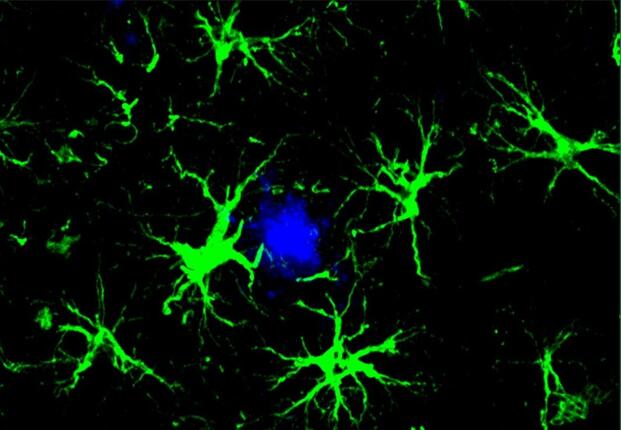
Washington University researchers designed a cellular immunotherapy that turns astrocytes (green), a type of cell in the brain, into super cleaners that sweep away Alzheimer’s-related proteins. With this new feature, the cells successfully reduced the amount of harmful amyloid beta plaques (blue) in the brains of mice. (Washington University) Military.com | By Brandon Wile Published March 15, 2026 at 7:03pm ET Engineered immune cells targeted and reduced the toxic protein plaques that drive Alzheimer’s disease in a recent study. Alzheimer's and related dementias represent a growing crisis within the Department of Veterans Affairs medical system.
Researchers at Washington University School of Medicine in St. Louis, Missouri, the academic partner of the VA St. Louis Health Care System, engineered the cells for the study published Feb. 9 in the Proceedings of the National Academy of Sciences (PNAS). It represents the first time CAR-T cell therapy, a technique developed to fight cancer, has been applied to a neurodegenerative disease.
The VA’s Veterans Health Administration estimates that roughly 10% of VA patients ages 65 and older have dementia, and the VA's Office of Policy and Planning has projected a 22% increase in the number of VA patients with dementia between 2020 and 2033, from approximately 276,000 to 335,000.
More than half of all VA patients are 65 or older. Veterans face elevated risk factors that the general population does not: Large-scale longitudinal studies have found that veterans with post-traumatic stress disorder are at 50% to 60% greater risk of developing dementia, and the risk associated with traumatic brain injury may be even higher. A January 2026 study published in Frontiers in Dementia found that veterans carry higher aggregate prevalence of nearly every modifiable dementia risk factor, including diabetes, chronic pain, smoking, depression, sleep disturbances and hearing loss.
Research from the VA's own Million Veteran Program has shown that PTSD and TBI interact with genetic risk factors for Alzheimer's, meaning that service-connected conditions may compound the biological vulnerability to the disease. As the post-9/11 generation ages into the peak risk window for dementia, the need for new treatment approaches is not theoretical. It is a coming wave that the VA is already preparing for.
Continue reading the full article →
Source: Military.com
Website: www.military.com